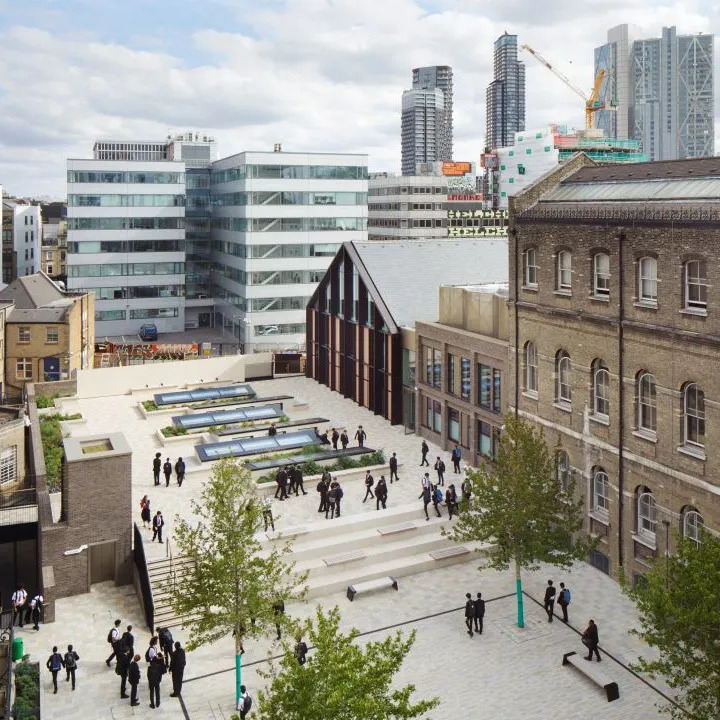
Central Foundation Boys’ School, a top-performing non-selective comprehensive school, has transformed its inner-city campus, providing state-of-the-art learning facilities for students between years 7-11 and sixth form. The decade-long, phased redevelopment consolidated and modernised a fragmented campus, preserving the school’s heritage buildings while maintaining full operational capacity throughout construction.
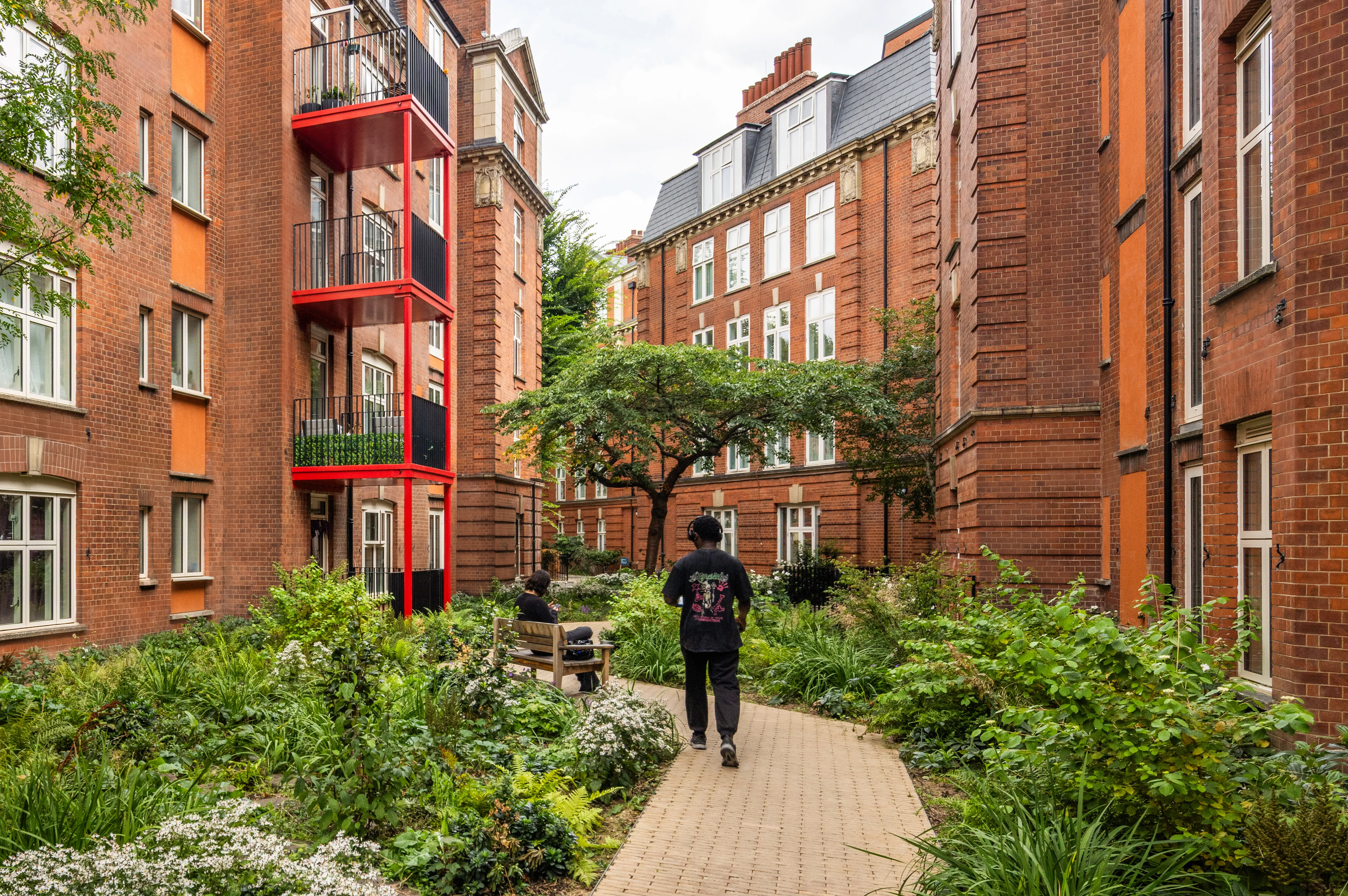
Sutton Estate, Chelsea, one of the UK’;s earliest social housing developments, has been remodelled and refurbished to continue William Sutton’s vision of providing high-quality homes for those in need. Designed with local residents, the 81 affordable and future ready homes are served by ground source heat pumps, reducing carbon emissions and energy consumption.
The transformation of Kidderminster’s Grade II listed Former Magistrates’ Court has brought a once-derelict gateway site back to life as a thriving hub for enterprise, creativity and community activity. Led by Wyre Forest District Council with support from the Future High Streets Fund, the project reopens a cherished historic landmark while equipping it for modern use.
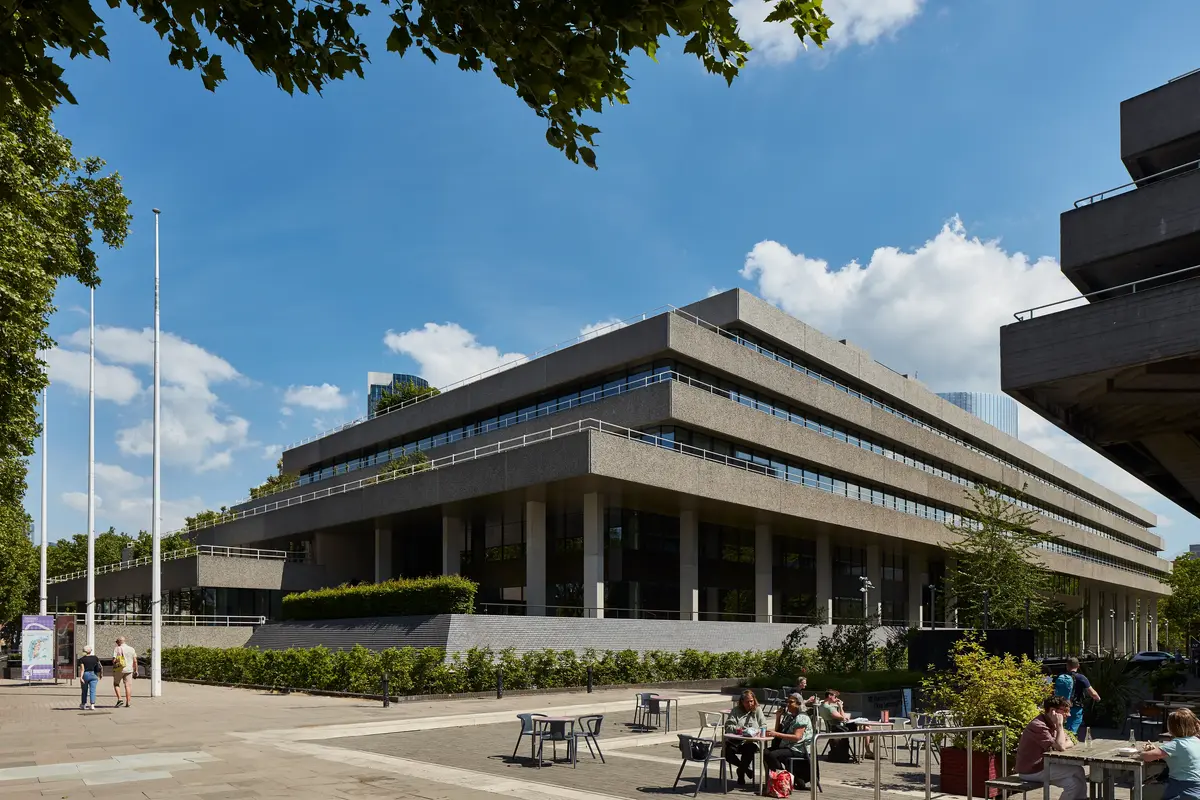
Originally designed by Sir Denys Lasdun, completed in 1983 as the office and marketing building for IBM, the project sees the careful refurbishment and extension of the Grade II listed building to deliver an additional 11,000 square metres of flexible and highly sustainable office space while preserving this important building for the long-term future.
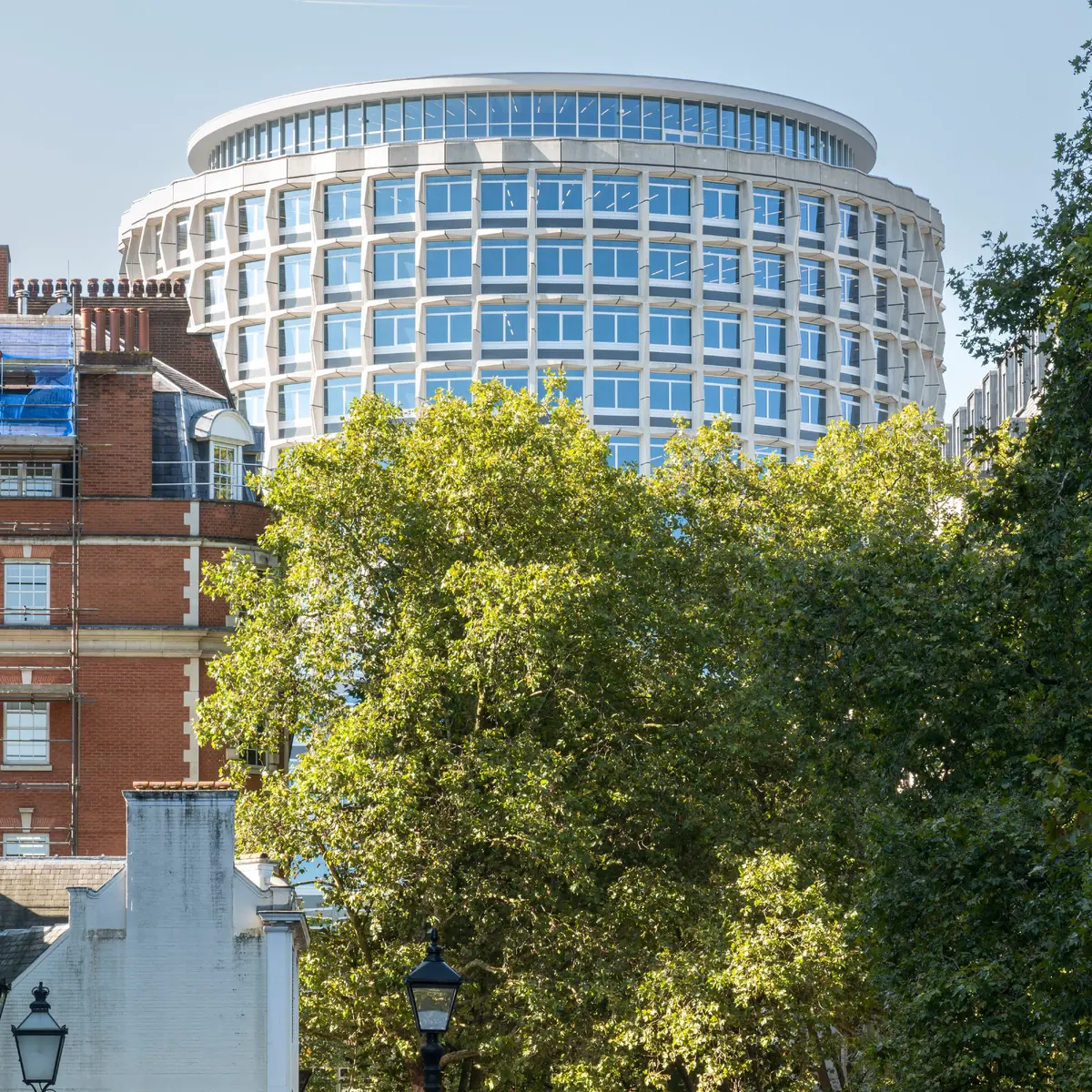
The iconic Grade II-listed Space House has been sensitively refurbished and extended by Squire &Partners for Seaforth Land and QuadReal. A symbol of the 1960s commercial property boom, Space House was designed by Richard Seifert and Partners and is known for its innovative architecture, with a distinctive cylindrical tower, rectilinear block and connecting bridge.
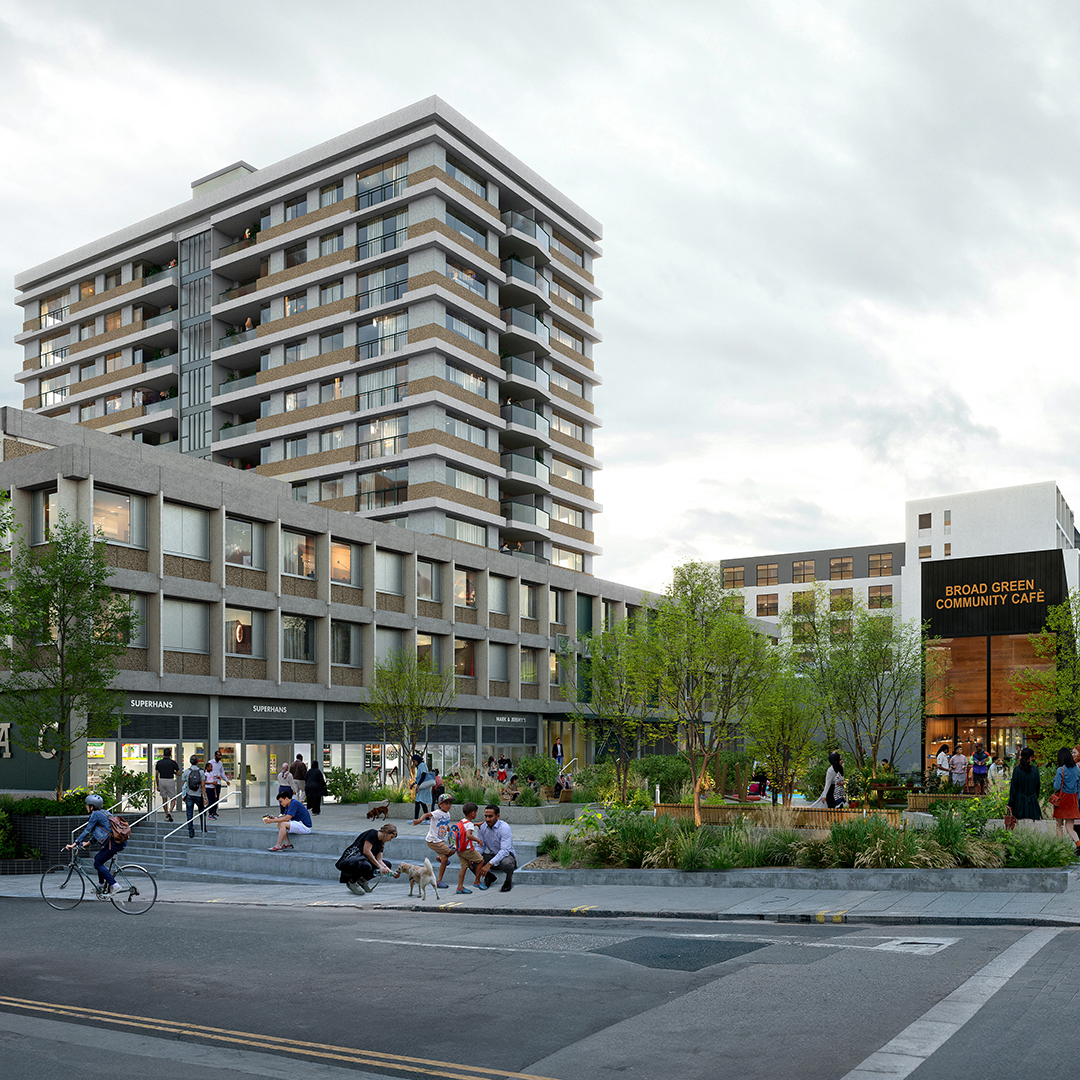
Zodiac sees the transformation of a worn-out, concrete 1960s complex in West Croydon into 73 high quality homes for families at risk of homelessness, with new community facilities and a new public square. It demonstrates a commercially viable and sustainable retrofit model that serves both new and existing residents, local community groups, and the Council, all within the framework of the site’s unique architectural context.
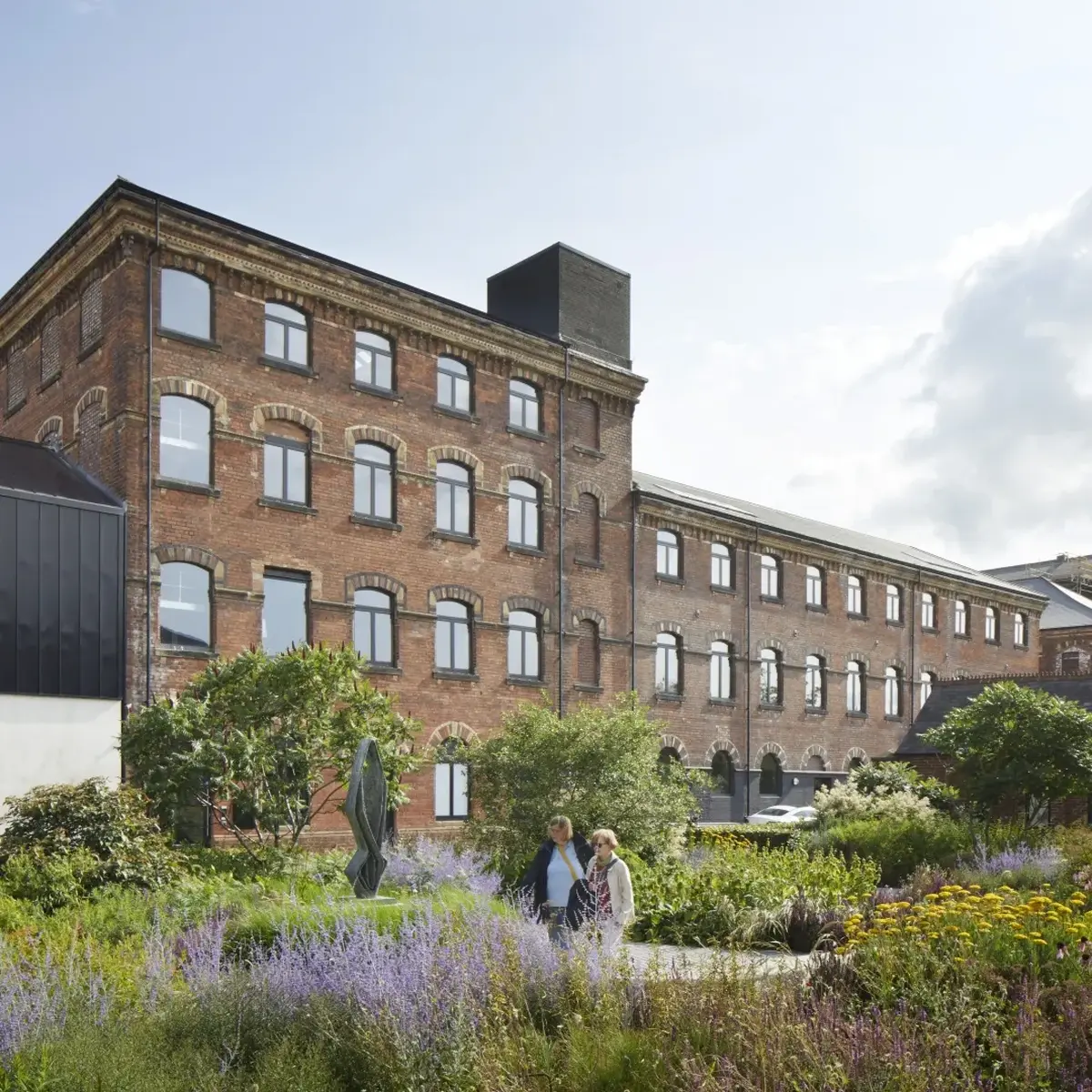
Tileyard North is the final piece of a regeneration masterplan breathing new life into Wakefield’s waterfront, converting several long-derelict Grade II-listed mills into a world-class mixed-use creative and cultural cluster. The fully occupied Phase 1 reimagines four mill buildings, creating a new public square that accommodates a wide range of uses, including recording studios, an event space, and a gin distillery.
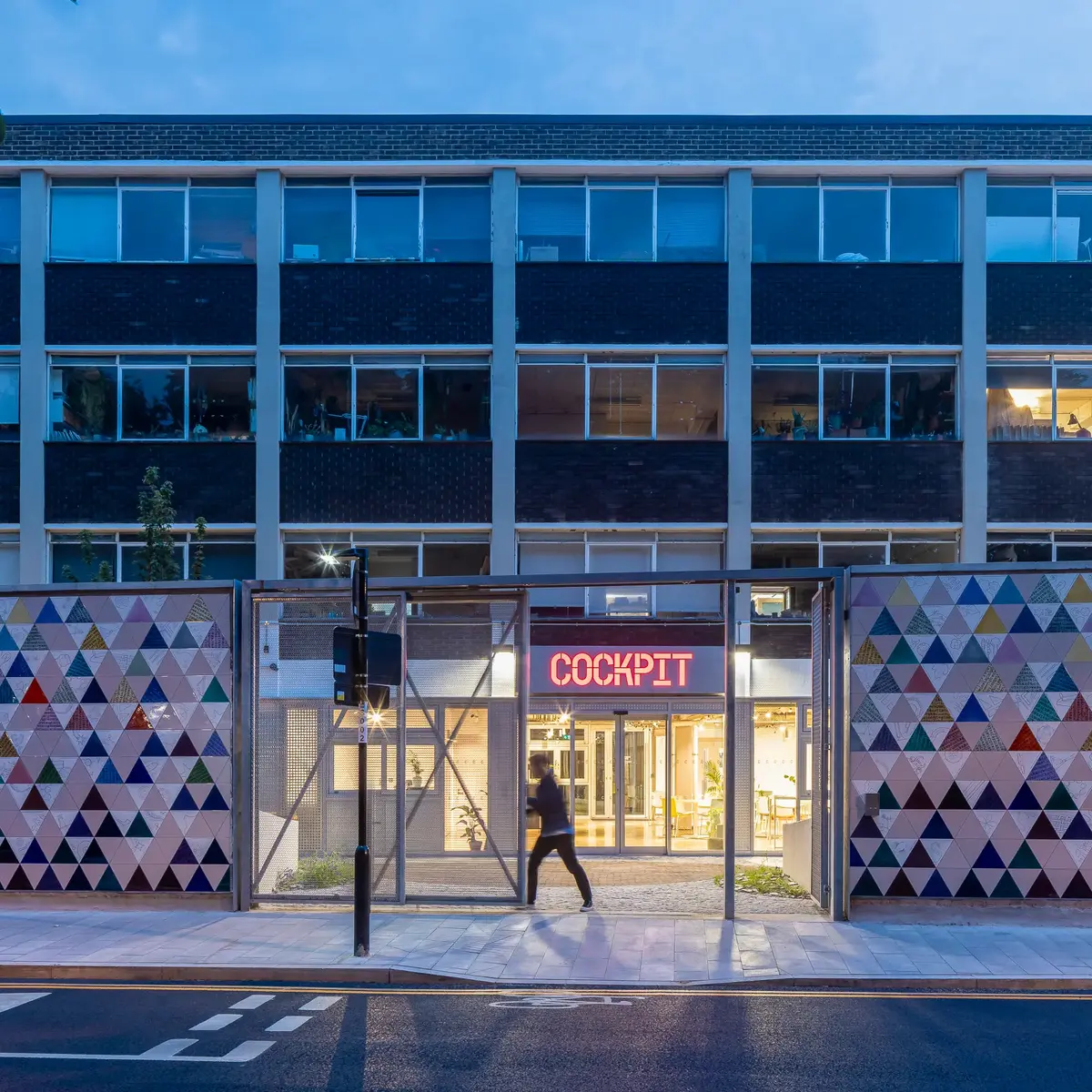
Cockpit Deptford transforms a 1960s former council building housing 60 craft studios, adding 20 new affordable spaces and public amenities. A 6m-wide opening in the street façade activates a previously hidden yard as a welcoming craft garden. A new timber workshop provides specialist fabrication facilities. Through thoughtful retrofit rather than demolition, the project preserves embodied carbon whilst dramatically improving environmental performance.
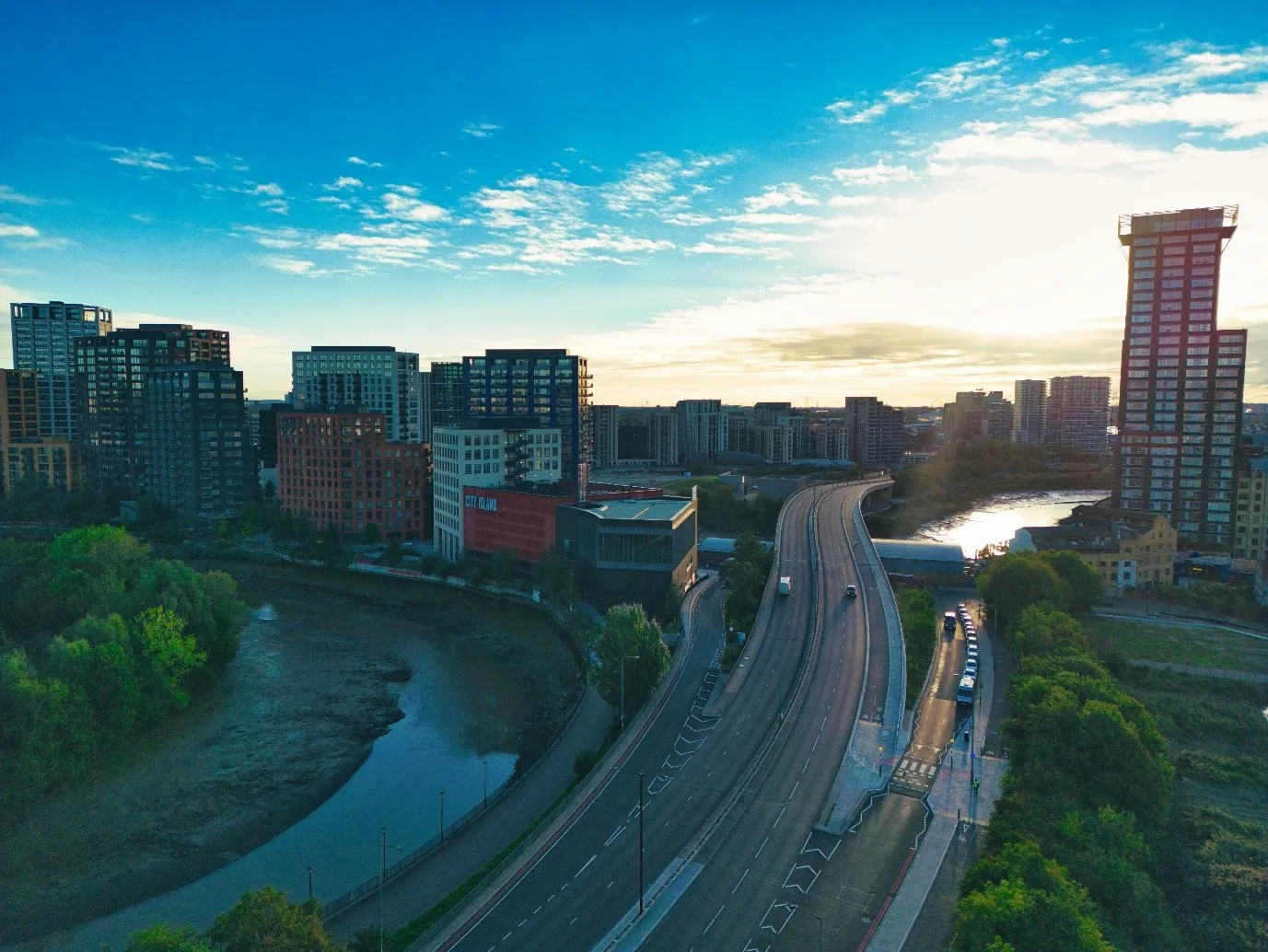
The Lower Lea Crossing scheme has transformed a key East London corridor into a safer, more welcoming route for all. With wider paths, new pedestrian crossings, increased clarity in the space and traffic calming, improved bridge structures, the project puts walking and cycling at the heart of local travel. It reduces traffic speeds, improves connectivity, and creates healthier, more sustainable streets for growing communities.
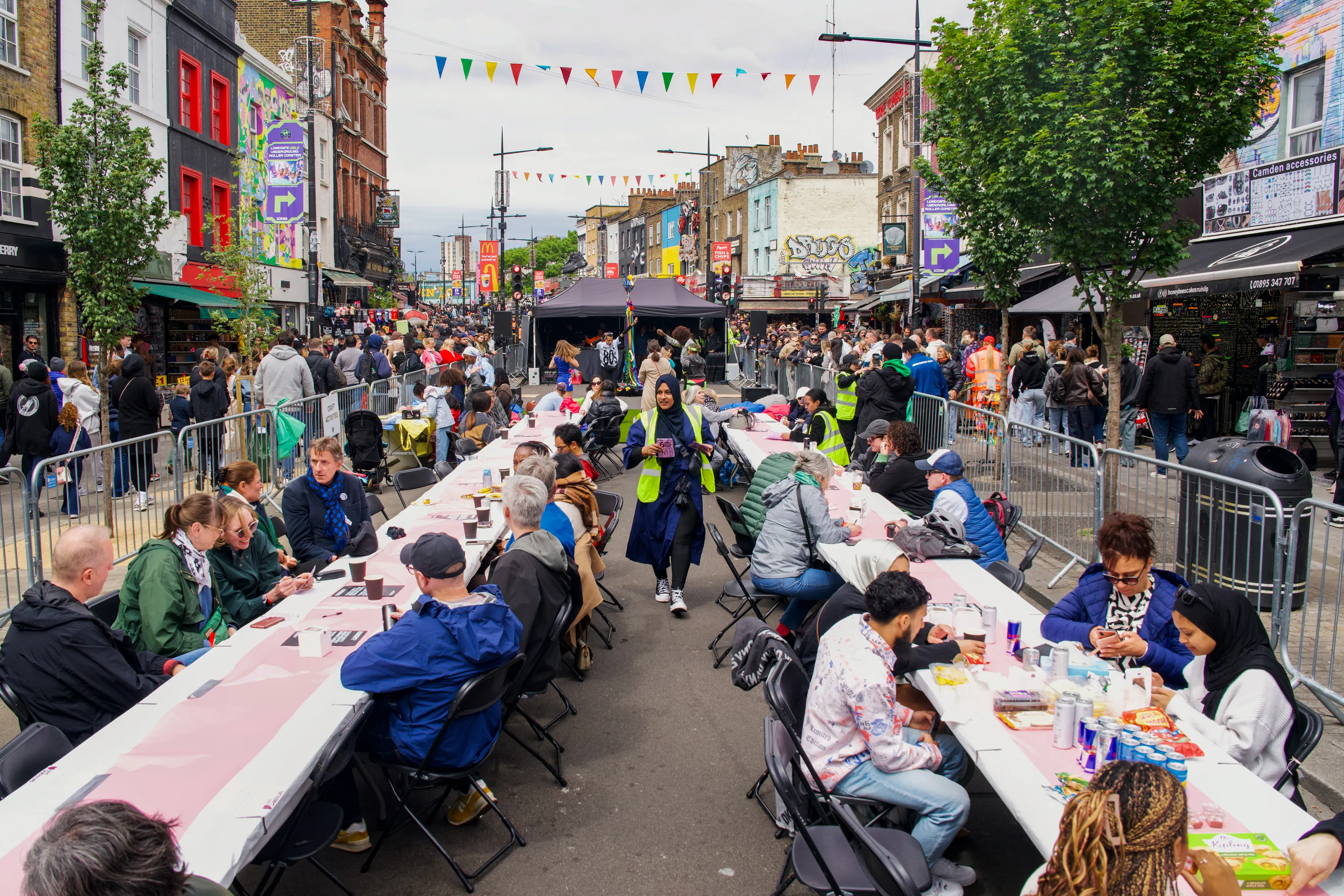
The Camden High Street Pedestrianisation Trial is transforming one of London’s most iconic destinations into a safer, greener and more welcoming place for residents, businesses and visitors. By removing through-traffic, widening pavements and creating new space for culture, nature and community activity, the scheme improves air quality, accessibility and public safety. Co-designed with local people and partners, it supports Camden’s Climate Action ambitions.
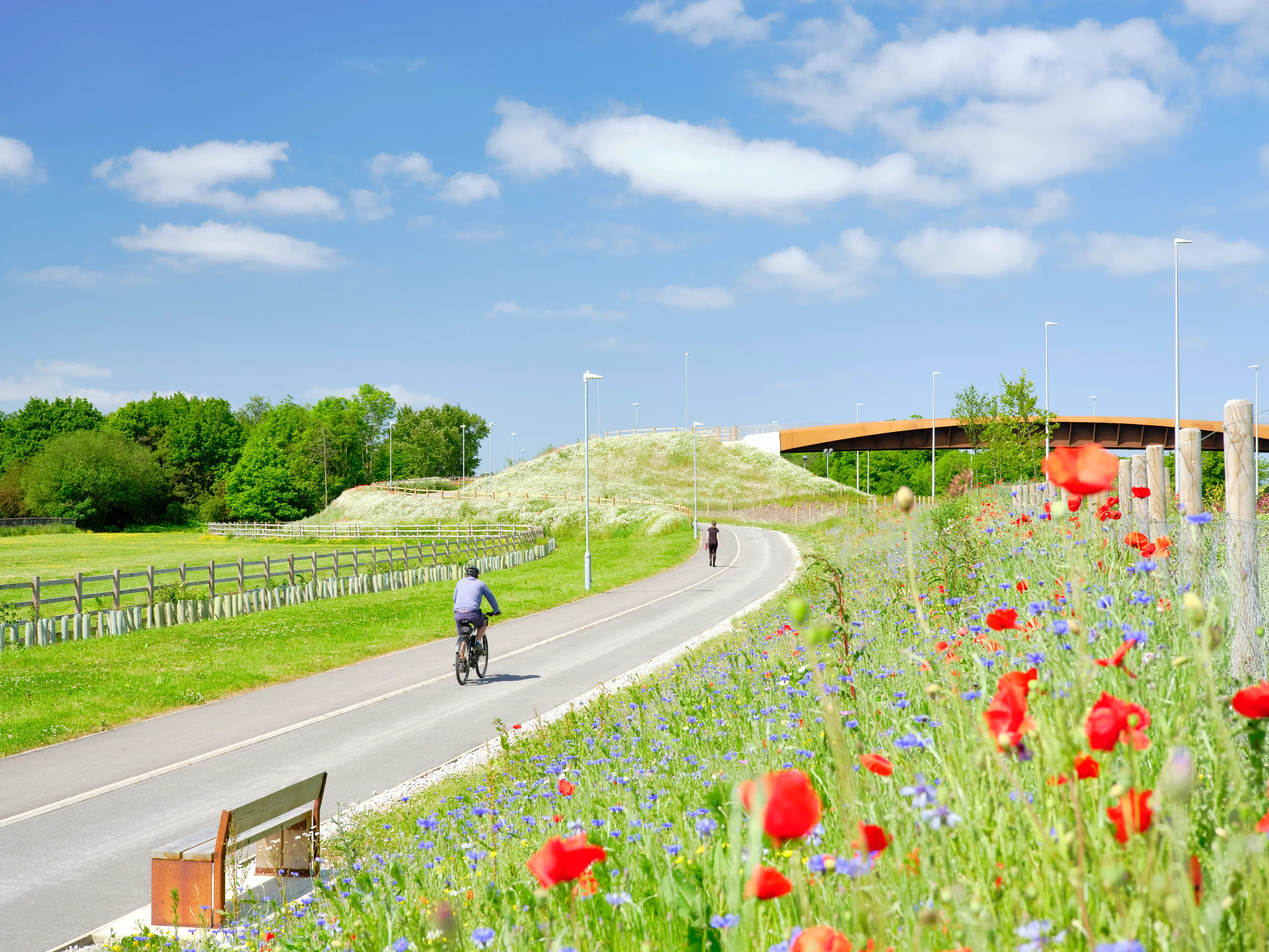
The East Leeds Orbital Route redefines infrastructure as landscape-led design. Conceived through co-design with local communities, it delivers on its bold vision: a country park with a road running through it. The 7km green corridor connects existing neighbourhoods and future planned communities, integrating walking, cycling, and equestrian routes within a biodiverse setting of meadows and woodland. ELOR accommodates movement and ecology, creating a resilient, inclusive environment.
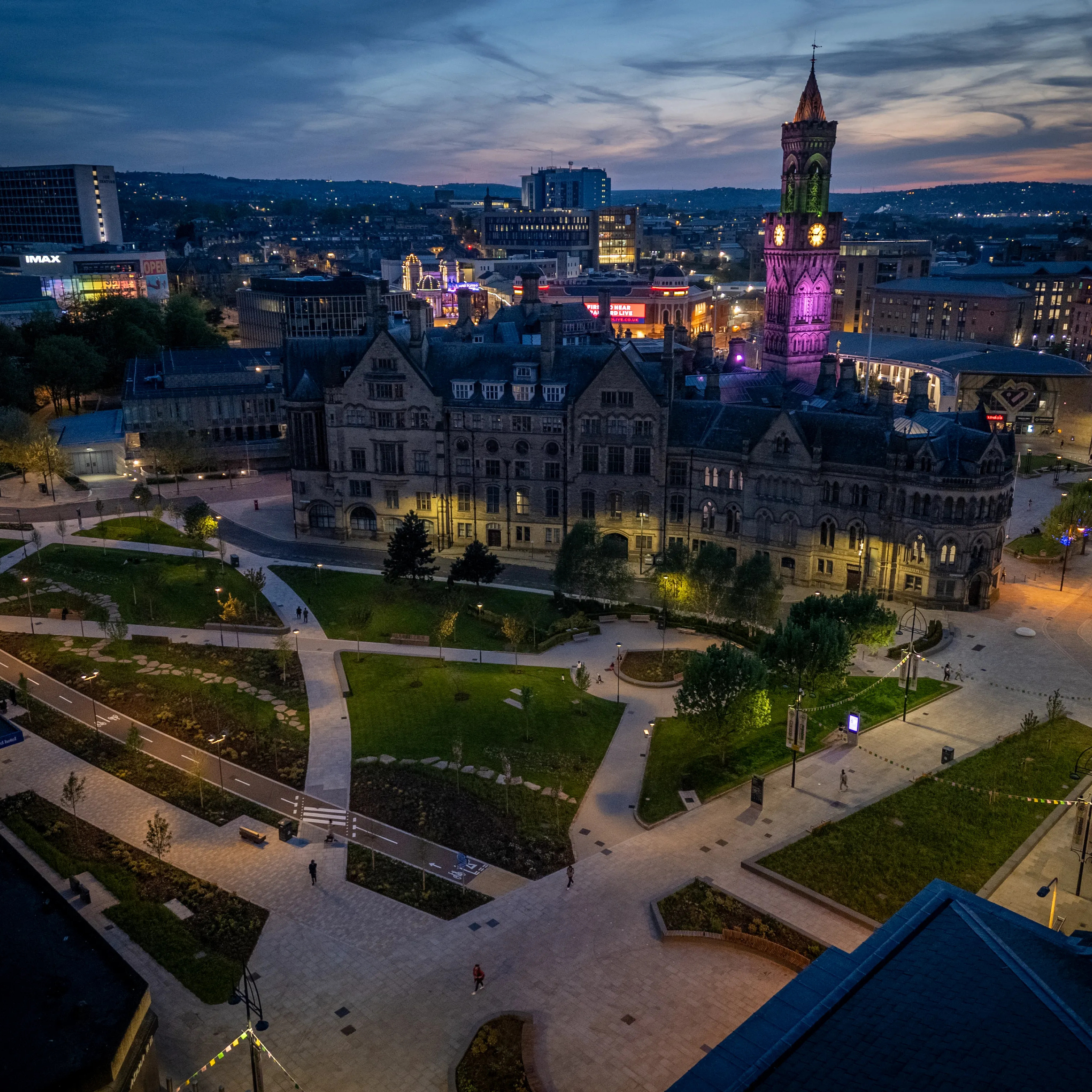
The Bradford City Centre Walking and Cycling Improvements Scheme – Transforming Cities Fund scheme represents a bold reimagining of mobility and public realm, placing health, equity, and sustainability at the heart of regeneration. Its purpose is to reshape Bradford city centre into a cleaner, greener and more inclusive environment, encouraging walking, cycling and public transport ahead of car dominated gridlock, while delivering long-term improvements in health and wellbeing.
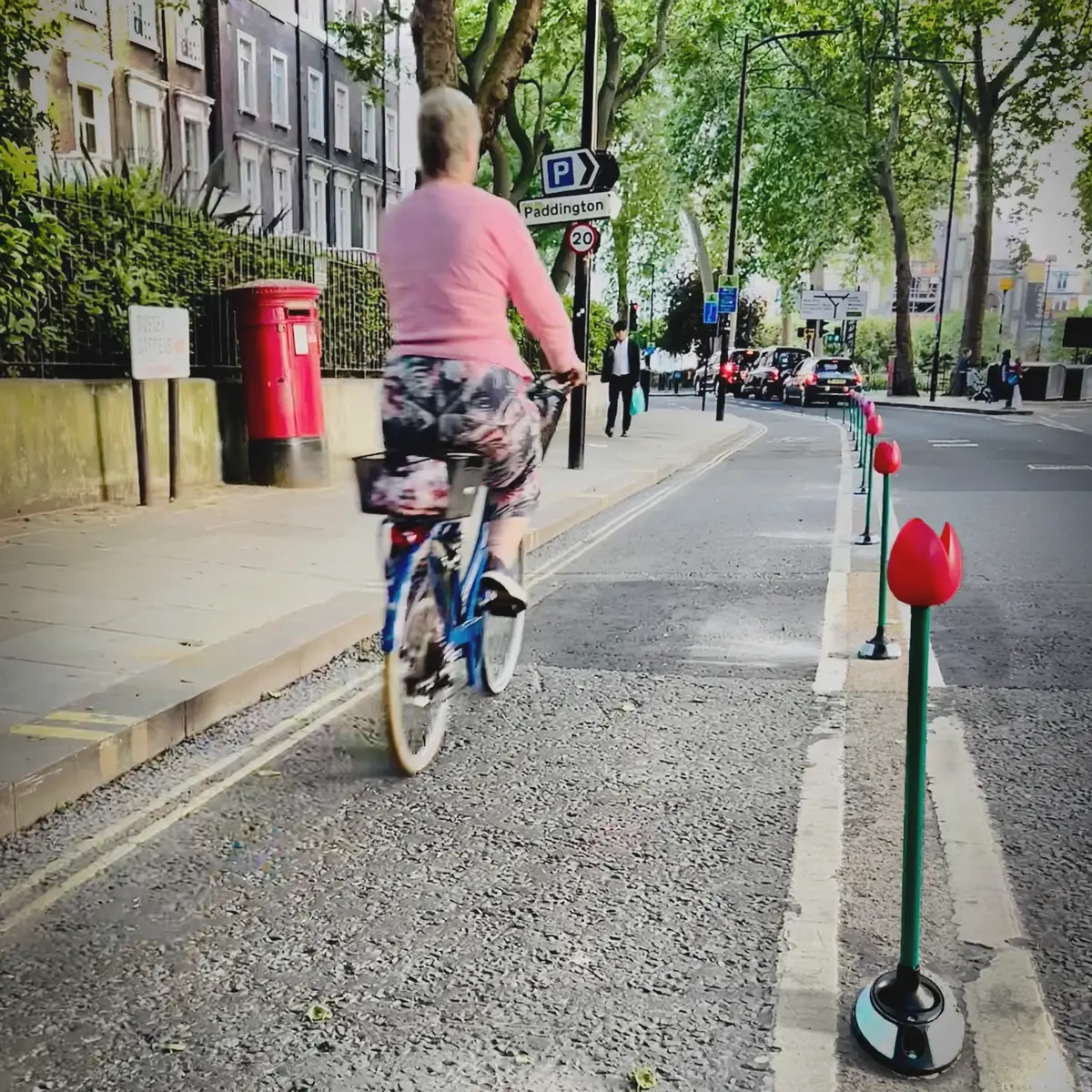
The Tulip Cycle Wands bring safety and joy to our streets – a softer, sustainable alternative to bulky, utilitarian bollards. Made with recycled plastic, each Tulip allows waste to bloom into beautiful, functional infrastructure that protects cyclists and elevates the streetscape. By reimagining urban design with care for both people and the planet, the Tulips reduce environmental impact and support cities in meeting their climate targets.
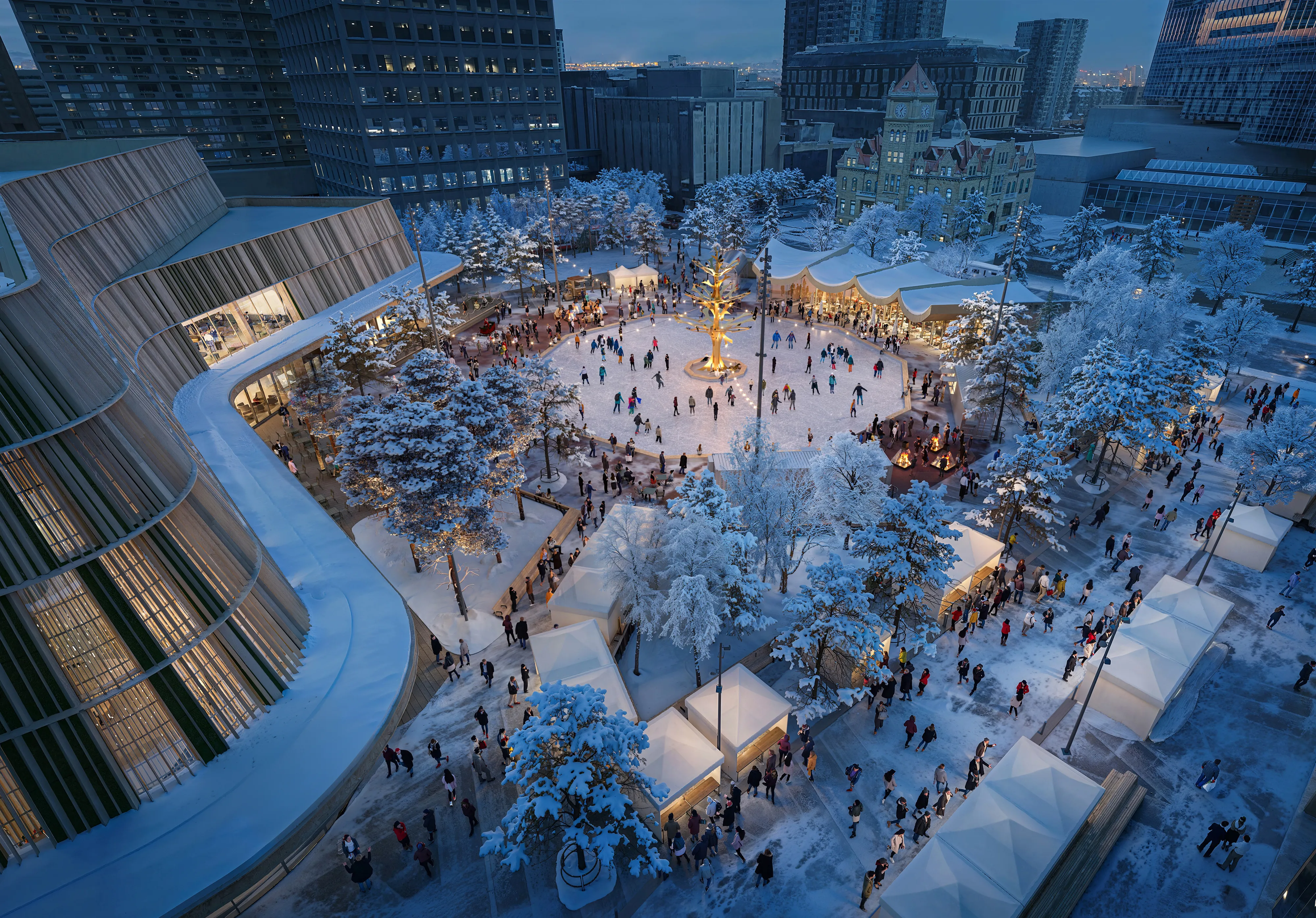
The Olympic Plaza Transformation (OPT) will revitalize a 35-year-old outdoor urban gathering place and cultural landmark as a modern, public space that connects with the expansion of an existing arts facility to create a complete ‘campus’ experience. The integrated transformation of the plaza with the adjacent Werklund Centre will enliven a historic downtown block by providing flexible public space that can accommodate a wide range of events and programming for up to 5,000 people.
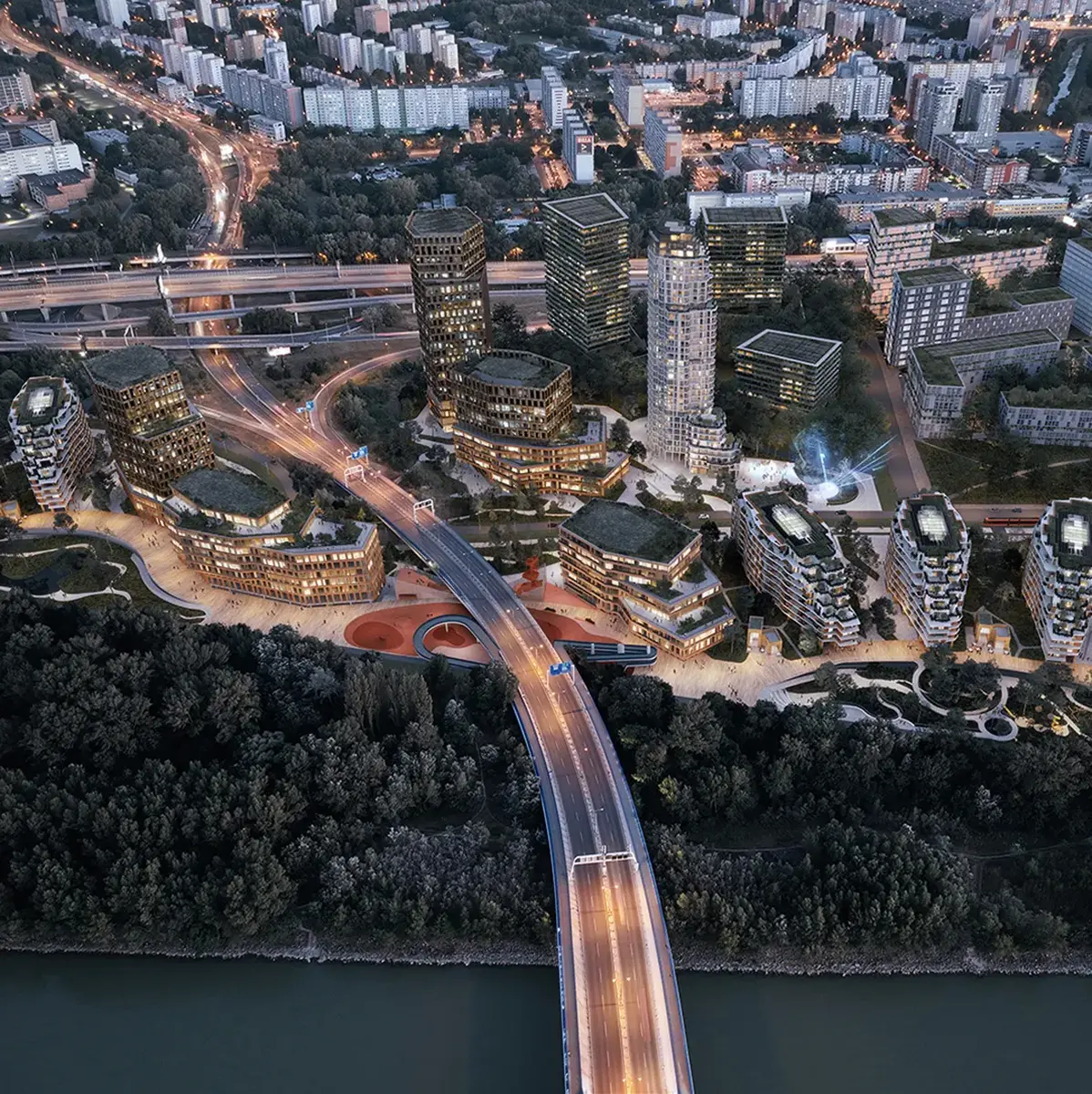
Southbank Bratislava reimagines the Danube’s southern bank as a dynamic mixed-use district with a balanced blend of homes and workplaces, the masterplan is carved into five distinctive ‘bowls’ of activity and ecology, all linked by an activated central boardwalk. Residential buildings embrace organic, terraced forms, while workplace clusters step up to create a striking gateway to the city.
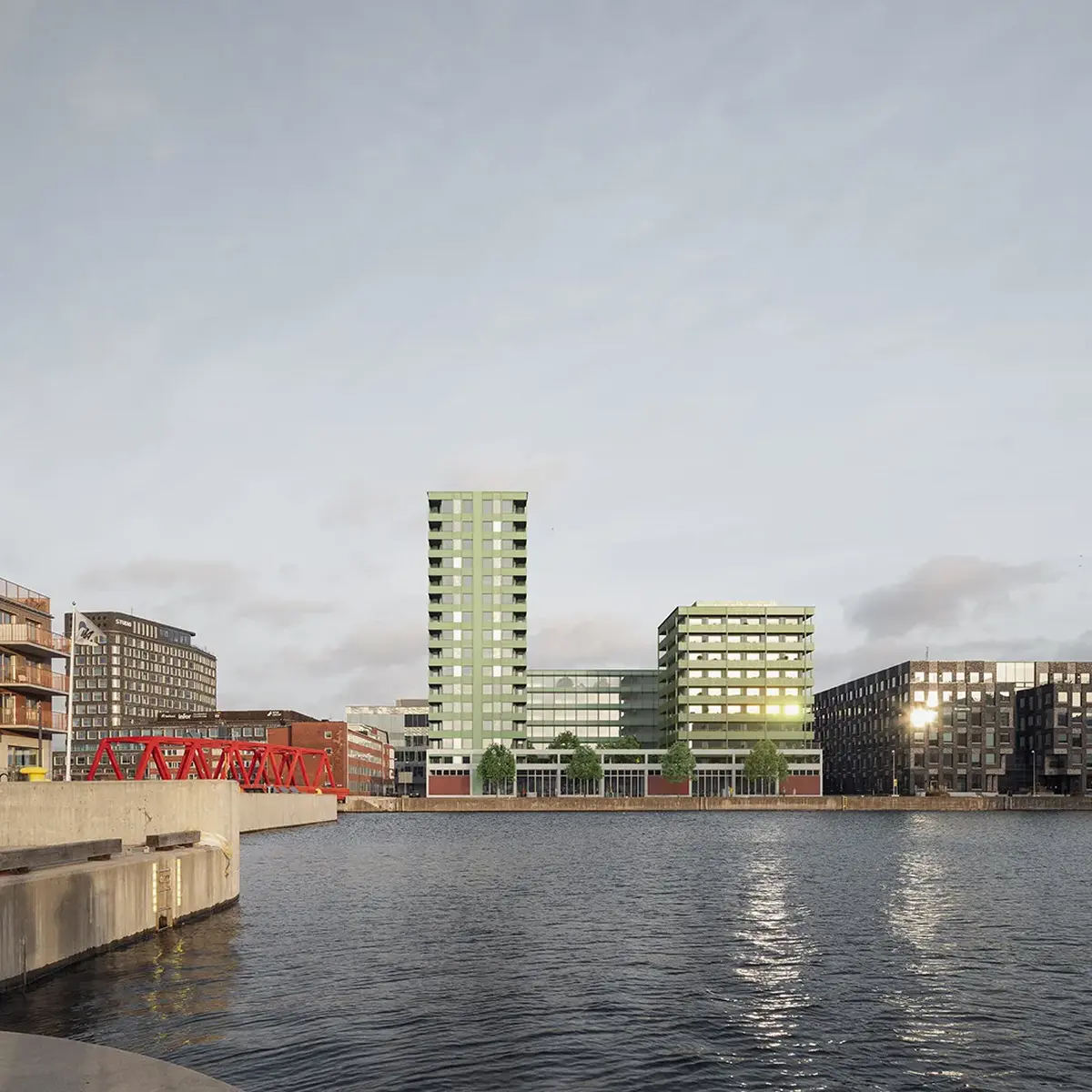
The re-development of the Trollhättan 6 city block into a mixed-use urban quarter in Malmö, Sweden proposes a hybrid architecture that combines both workspace and housing, while the ground floor contributes to vibrant urban life along the quayside and in the surrounding streets. The ambition of the scheme includes the careful re-use of existing elements of an office block and car park, with a bold sustainability agenda.
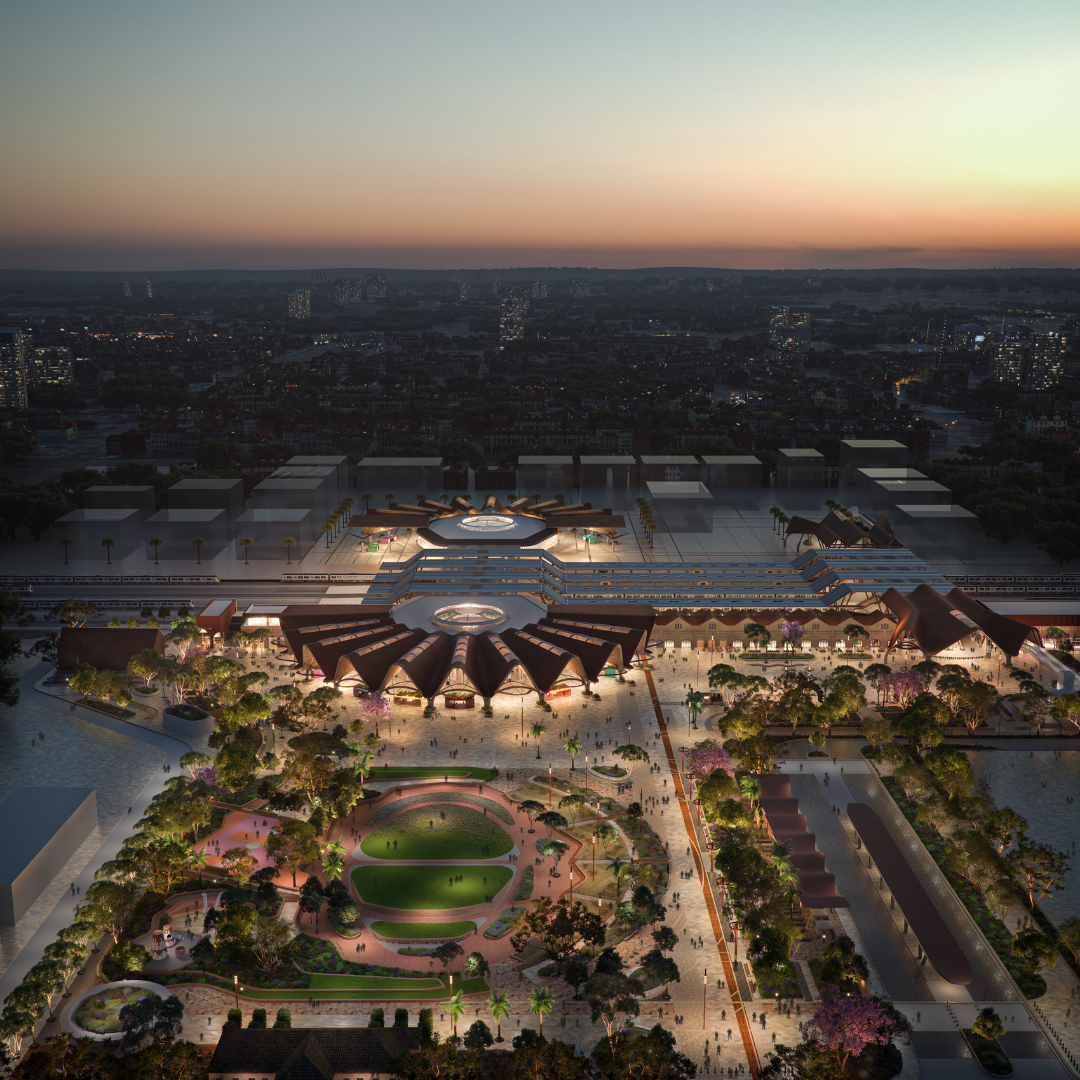
Nairobi Central Station is the heart of Railway City—a visionary urban regeneration project transforming 170 hectares into a vibrant, transit-oriented hub. The station design blends heritage with the modern outlook for Nairobi, accommodating up to 30,000 passengers per hour. Inspired by Kenya’s cultural “Boma,” it offers a welcoming public realm that stitches into the city’s urban fabric. Sustainability has been integrated throughout the design with rainwater harvesting, biophilia and climate.
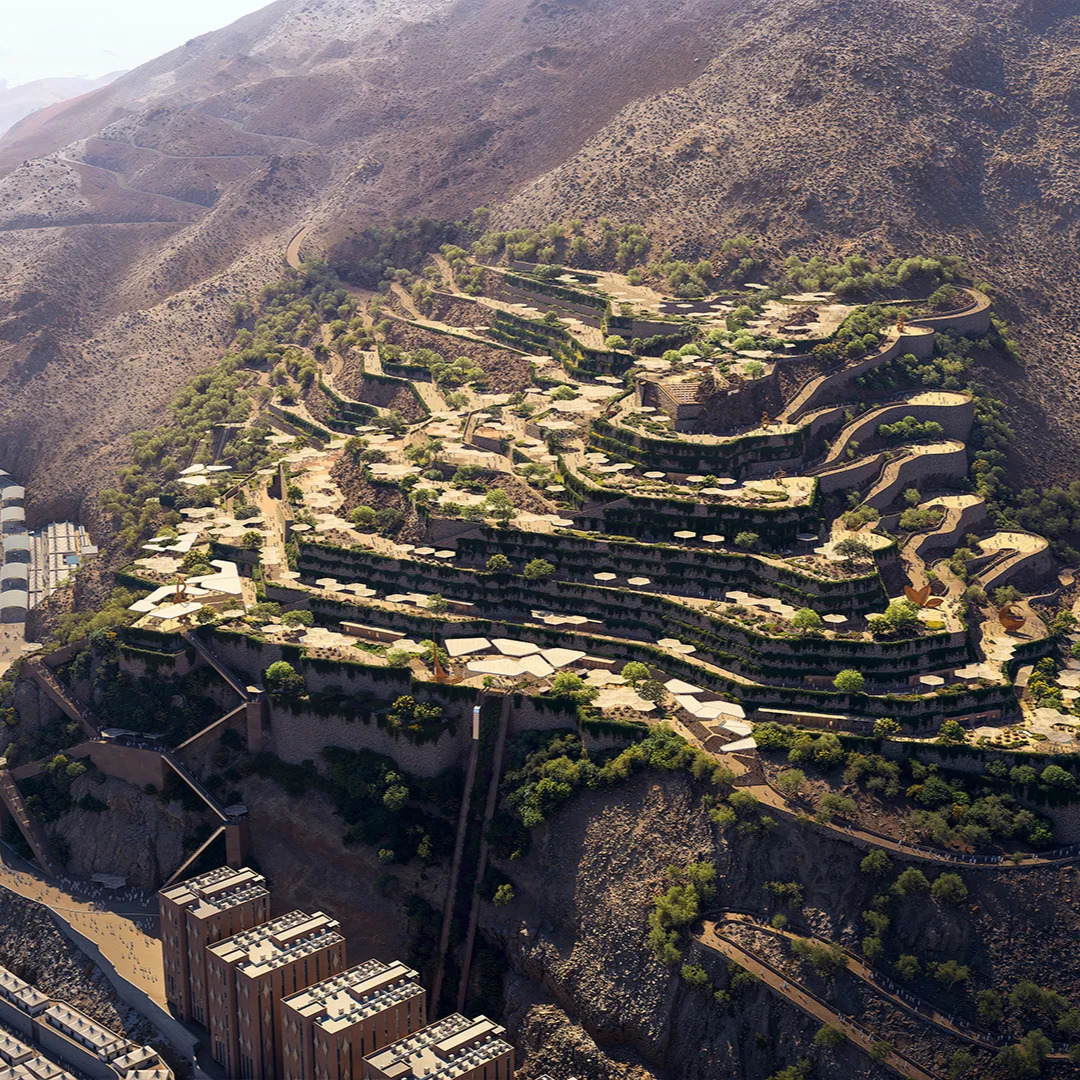
Jabal Thabeer Park transforms one of Makkah’s sacred mountains into a place of reflection, renewal, and belonging. Rooted in the rituals of Hajj yet looking firmly to the future, the design creates a sanctuary where pilgrims and communities can gather, rest, and connect. Blending faith, landscape, and innovation, Jabal Thabeer is envisioned as a beacon of continuity, a timeless public realm that honours tradition while shaping the spiritual journeys of generations to come.
This redevelopment will add 24,000 m² of new convention and exhibition space over three levels to the existing Hong Kong Convention and Exhibition Centre (HKCEC), increasing capacity by 35%. A new 100-storey tower will provide 200,000 m² of Grade A office space across 80 floors, accommodating up to 17,000 workers. Also included is a 20-floor, 50,000 m² 5-star hotel with 500 rooms. Together, these buildings establish a new centre of gravity in Wan Chai.
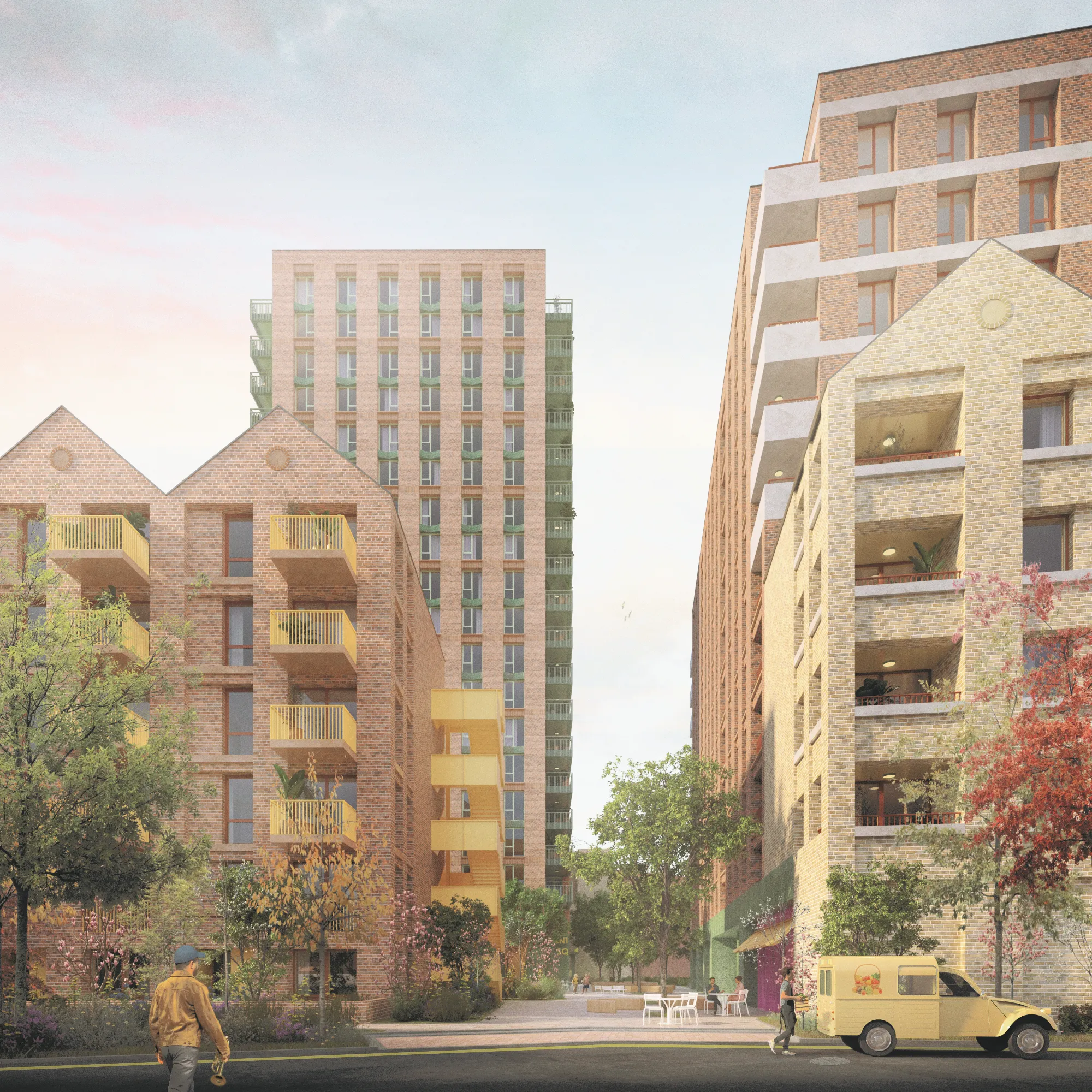
The transformational redevelopment of a tired 1970s shopping centre into a vibrant residential quarter in the heart of Orpington town centre. Approximately 500 new homes will sit alongside 25,000 sq ft of retail space designed to accommodate local and independent traders, as well as a new market hall and rooftop community garden. The scheme takes a dual focus, both on creating a lively new neighbourhood and reconnecting isolated areas separated by the original mall.
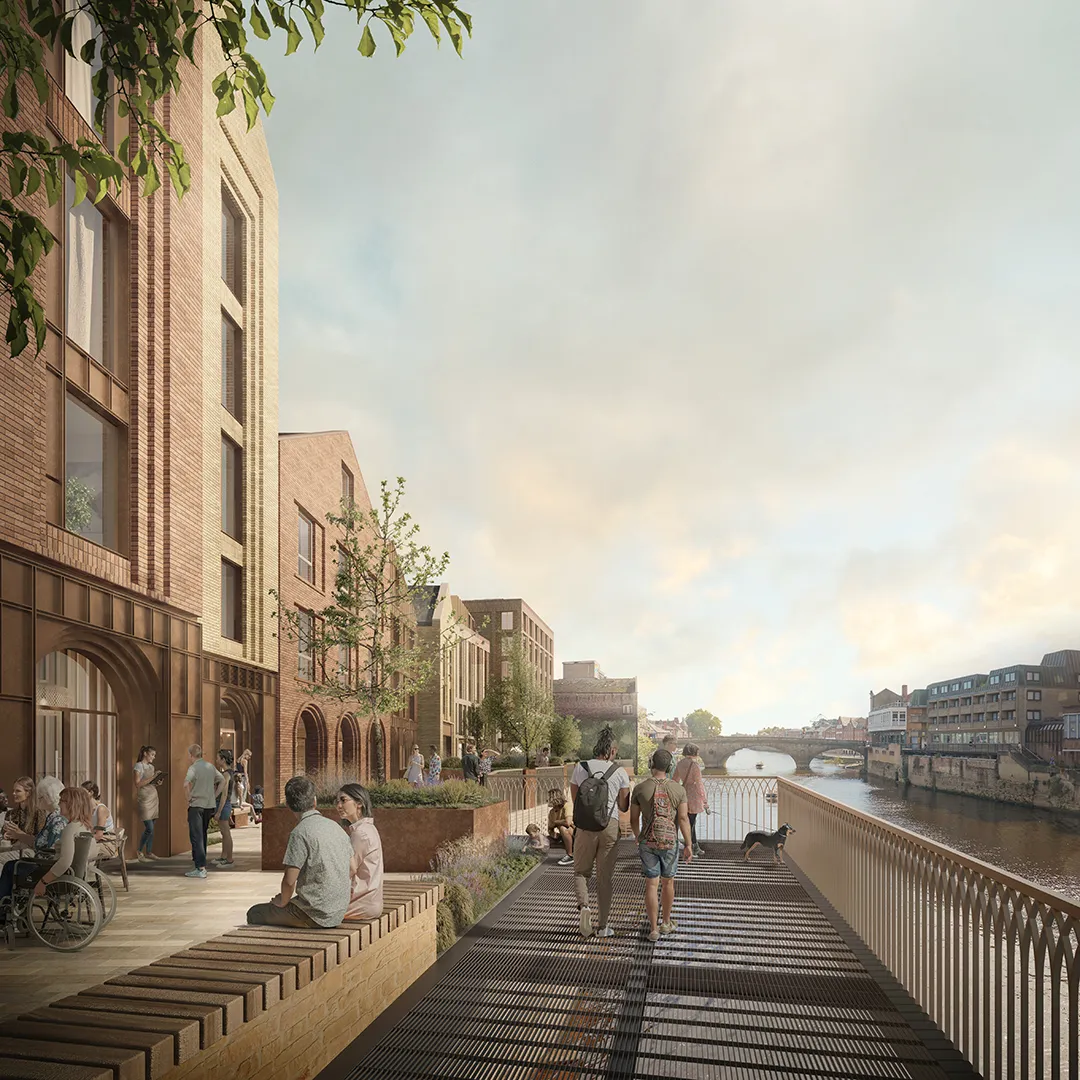
Coney Street Riverside creates a welcoming and vibrant city centre destination through the regeneration of one of the most important historic streets in York, Enhancing York’s unique character by creatively linking the riverside to Coney Street and opening up access for public use. This is an ambitious comprehensive mixed use masterplan incorporating extensive public realm, retail, leisure and student accommodation.
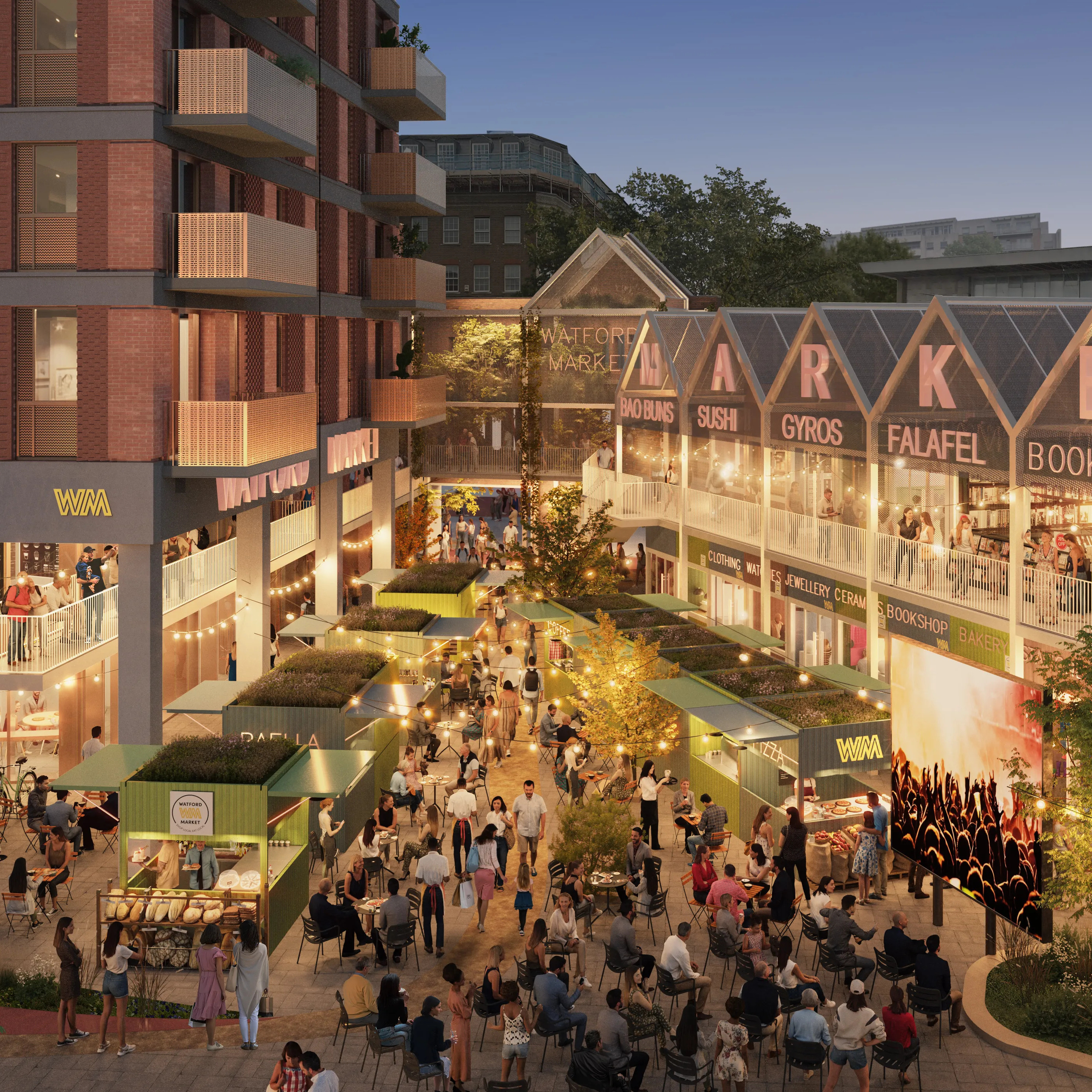
A bold regeneration project revitalising Watford Market as the vibrant heart of the town. The 4,600sqm redevelopment reconnects the market area with the local community through a series of layered spaces for living, co-working and socialising. It introduces 141 new homes, each with access to green terraces and biodiverse rooftop gardens, plus flexible workspaces and community-focused facilities designed to meet the evolving needs of Watford’s residents and local businesses.
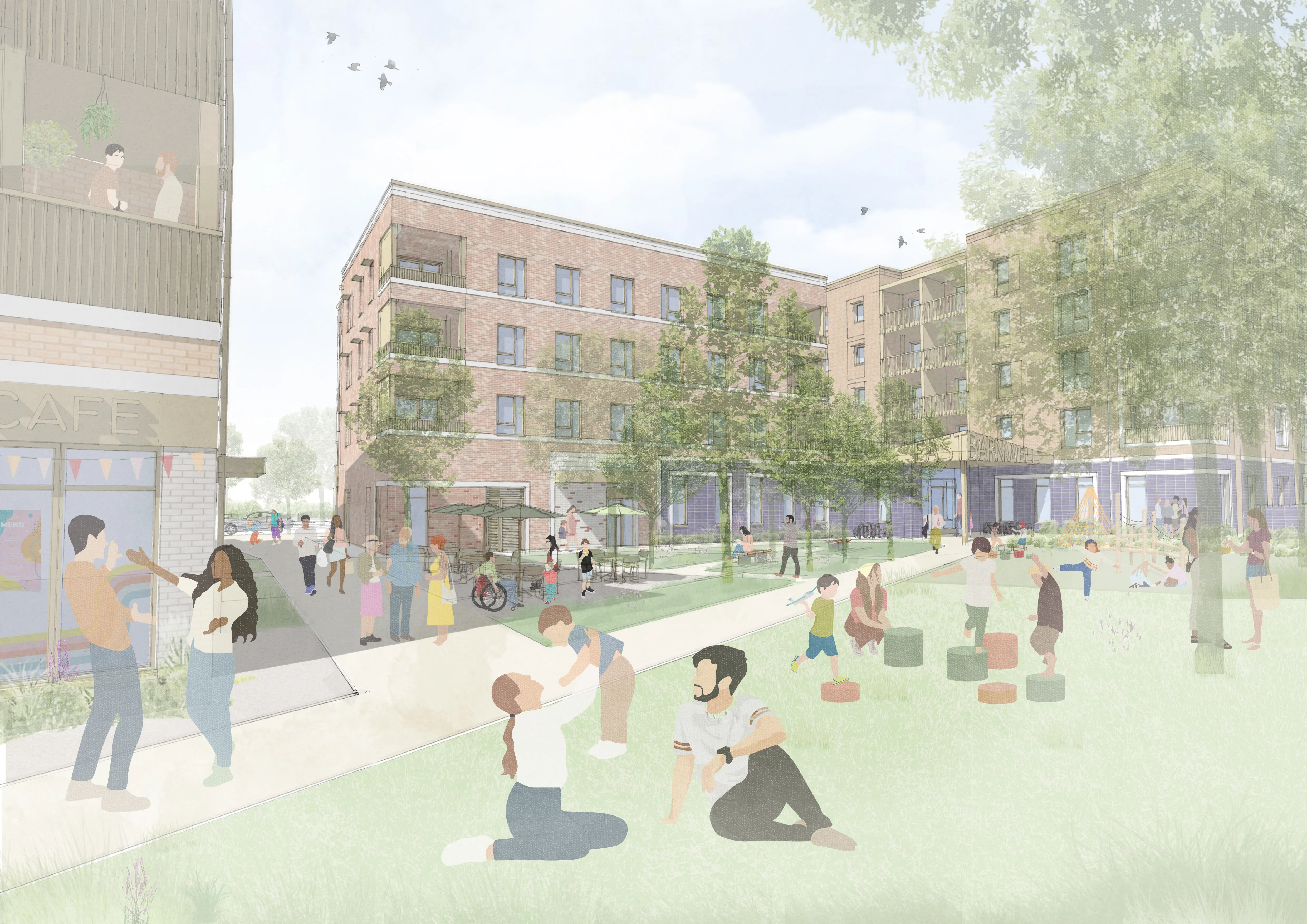
East Barnwell marks the long-awaited renewal of a deprived and fragmented neighbourhood in northeast Cambridge. Developed through Cambridge Investment Partnership, the masterplan delivers 120 council homes, a community hub, library, pre-school, commercial units and a new public square. It tackles long-standing issues around connectivity, social infrastructure and access to open space.
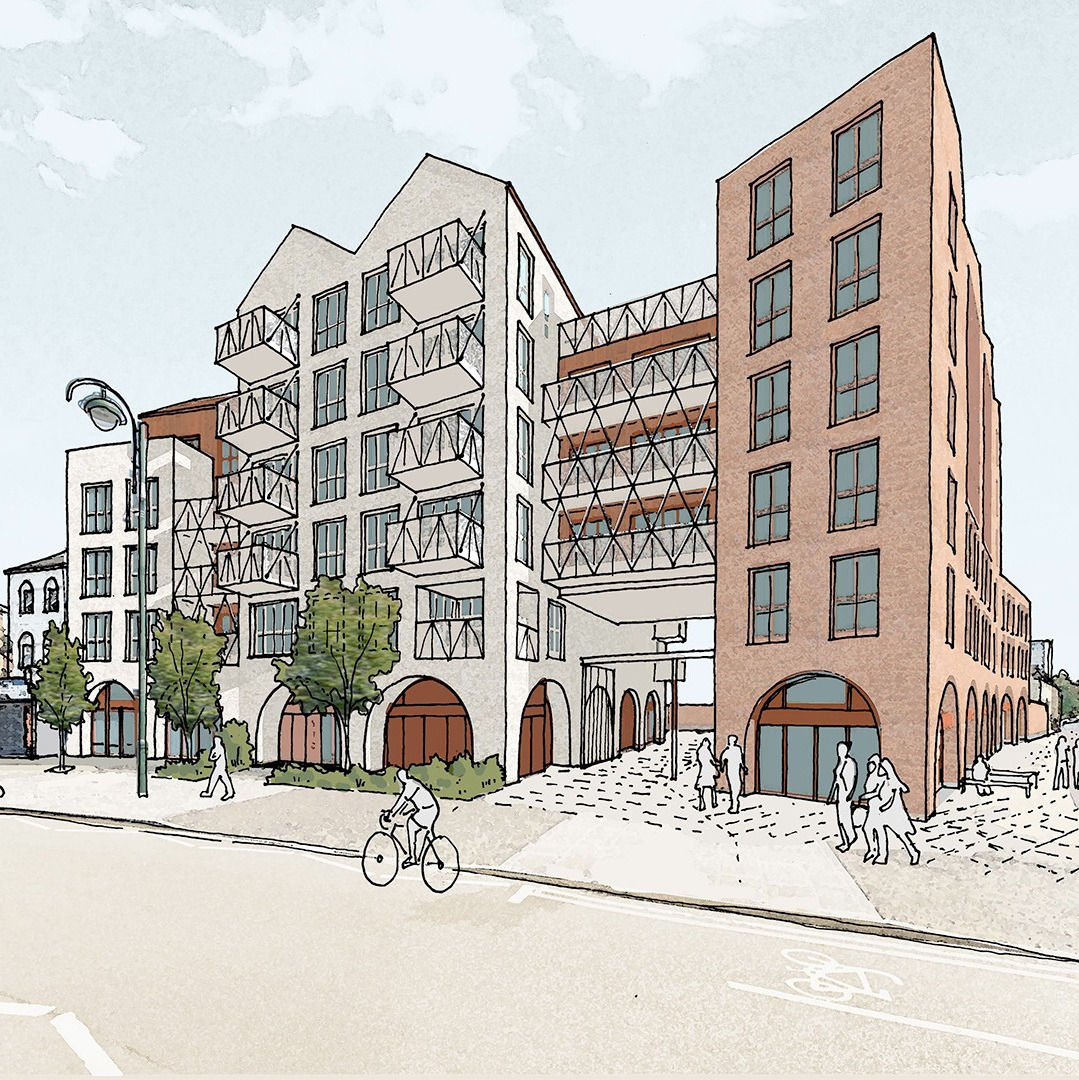
A new mixed-use destination for Leytonstone, located opposite the train station, replacing a disused builders yard.The proposals cluster flexible, affordable, workspaces around a central yard, and along the existing railway edge, activating the street and creating a new pedestrian walkway known as Arch Walk. These units will attract independent businesses, artists and makers. 39 flats are located above.